Resources

Follow Us: Follow us on Facebook
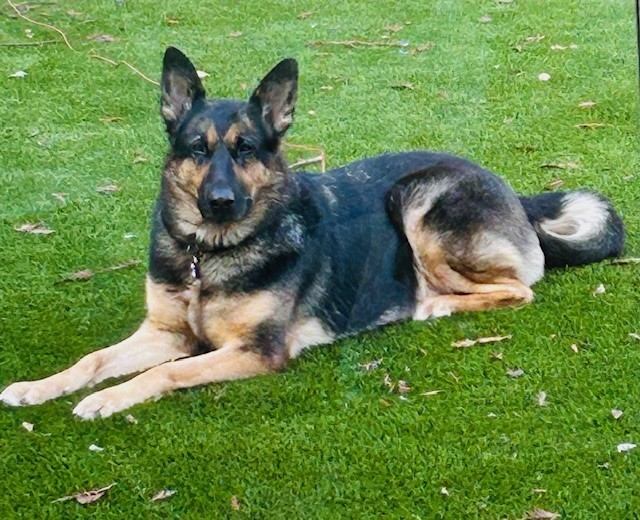
Lonely GSD in the shelter

For only 75¢ a day you can help us pay for one month of food for a rescued German Shepherd.

Is the German Shepherd Dog (GSD) Right for You?

Consider the following: German Shepherds are not the right dog for every family. They require time, companionship, exercise, training, more time, and more training. You need to be able to train, direct, and control German Shepherd Dogs, or they will take over and direct, control and train you. This does not mean that you need to yank, beat, abuse, yell at or "Alpha roll" your dog. It means providing calm, firm, leadership and interacting consistently with the dog in such a way that s/he respects you. You can develop such a relationship through consistent training, in basic manners as well as traditional obedience commands. Dogs in general, but especially German Shepherds, need good leadership. By being a fair leader, you will earn their respect, their trust, and their undying loyalty.

If you have children, or children visit your home, you should NEVER EVER leave a child unattended with ANY dog regardless of its breed or size. It is your full responsibility to supervise your dog’s interaction with children at all times. Your dog cannot reason like a human can. It is important to respect your dog’s TEMPERAMENT and its SPACE. Do not let children bother your dog while it is sleeping, or eating, or chewing on a bone or treat, or when it indicates it wants to be left alone. You may want to have a kennel or crate you can put your dog in while it is engaging in these types of activities so that it cannot be inadvertently bothered at these times. You can also put your dog in a crate or kennel if you know you are not going to be able to supervise the dog around children at a particular time. Do not let anyone, particularly children, poke or prod at your dog, pull its ears, tail or other parts of its body, or lie or jump on your dog. If you are not willing to follow these guidelines then you should not get a dog until the children are grown.

The German Shepherd Dog is a large, active dog with a dense double coat. This double coat sheds year round, and produces even greater volumes of fur when the dogs "blow coat" in the spring and fall. Some shed more than others. For some owners, this is not a trivial point.

The breed was developed for service as a herding and general purpose working animal. The desire to "work" or do something is genetic and is stronger in some German Shepherds than in others. Most adult German Shepherds are loyal, loving, protective, and intelligent. Without proper training, German Shepherds can also be rambunctious, destructive of property, and exhausting to live with. It is up to you to train your dog to suit your lifestyle and that of your family. Most, if not all, German Shepherds need training and a structured lifestyle to thrive in the home and become a canine good citizen.

You should consider the following recommendations as your basic commitment to your new German Shepherd. Take an obedience course to assure that you are the dog's leader. Be prepared to socialize your dog by exposing it to as many people and situations as possible to develop its confidence. You will need to give it an acceptable job including competition obedience, tracking, agility etc. if it has working level drive. Vigorously exercise the adult German Shepherd at least 20 minutes twice daily. You will need to exercise it more if it is young and/or it has a high energy level. Brush the coat often. Trim nails, clean ears, and brush teeth as needed.

If a change of residence is required, make sure that your German Shepherd is welcome at the new address before moving. If it isn’t welcome, find a place where it will be and move there.

Realize that a German Shepherd is a very social animal and should not be left alone for long periods of time.

Before any behavior problem gets out of hand be willing to call a trainer, a behaviorist, or a member of the local rescue group for help. This is especially true for any aggression-related issues including growling, snarling, nipping, and biting either humans or other animals.

Credits:
The preceding section is from a brochure written and produced as a service to the public and the venerable German Shepherd Dog breed by an eclectic group of individual German Shepherd owners, breeders, and trainers. The full brochure is available for reproduction and distribution free of charge by e-mailing tgsd-l-request@is.dal.ca. If you received an electronic copy we invite you to print it in your newsletters, add it to your Web pages, forward it to others, or cross-post as long as you leave these CREDITS attached.

See Is the German Shepherd Dog the Right Breed for You? (scroll down about four inches to find it) for some other facts to consider when deciding whether to adopt a German Shepherd.

Top 10 Reasons Why a German Shepherd Dog May Not be the Dog for You

  1. German Shepherds require a serious commitment. Many of the dogs that come to rescue organizations have no training. It is important that the new family puts time and effort into training their rescue dog.
  2. German Shepherds usually have a high energy level. The very energy that allows these dogs to be police, search, guide and herding dogs is often the reason these dogs are surrendered. If you’re looking for a couch potato you may want to consider a different breed.
  3. German Shepherds are highly intelligent. If they are not given a job to do they will often come up with their own, such as excavating your sprinklers, taking down your fence, chasing livestock, etc.
  4. Like any dog, the German Shepherd is a social animal and needs to be part of a family. The loyalty that endears this breed to many requires that it not be banished to the backyard.
  5. German Shepherds are large dogs. The number one reason given by people surrendering German Shepherds is moving. Usually apartment managers do not welcome these dogs. If you don’t know where you will be a few years down the line it is not the right time to adopt.
  6. German Shepherd Dogs shed non-stop. If you don’t like cleaning up dog hair consider a different breed. Bathing can be challenging due to the dog’s water-resistant outer coat.
  7. German Shepherd Dogs can be vocal, often whining and barking to communicate. If left alone for prolonged periods of time they may become problem barkers.
  8. A German Shepherd must respect its owner. This is not accomplished by heavy-handedness; it is only achieved when its owner treats the dog with respect and provides adequate leadership.
  9. These dogs originated as herding dogs. It is a heritage they carry still. Keep this in mind if you or your neighbors have livestock. Remember that in the state of California a dog harassing livestock may be shot.
  10. German Shepherd Dogs are one of the guard dog breeds. They can become overprotective towards possessions or property, even towards family members. If you know you are too soft to establish effective leadership or you know you like to spoil your dog, consider a different breed.

© 1998 Julie Connolly for German Shepherd Rescue with slight modifications
More Information About the German Shepherd Dog

You can find a range of information about German Shepherd Dog in the Frequently Asked Questions About German Shepherd Dogs.

Members Only